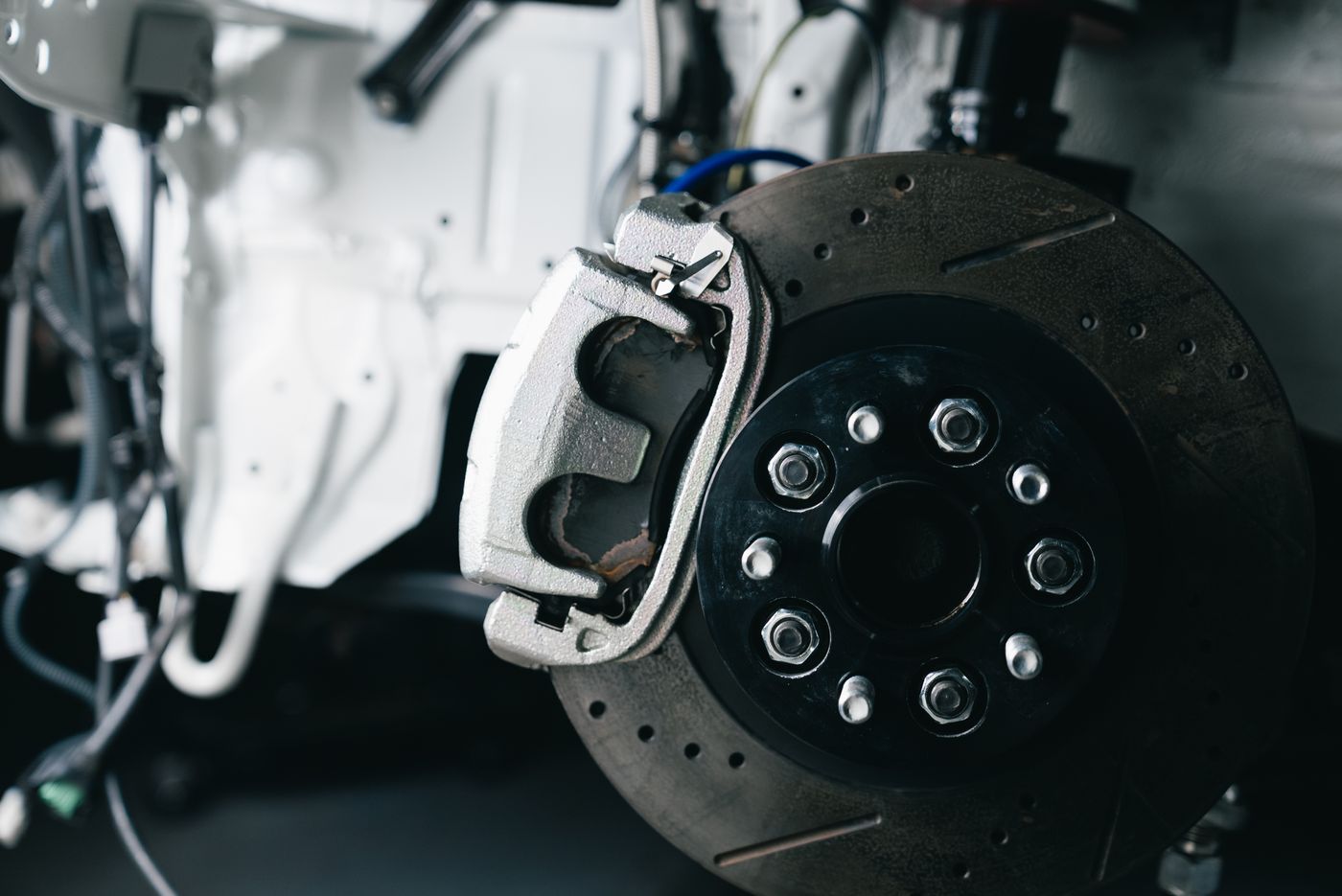
Short answer: a high-pitched squeal when you brake usually means the pads are getting thin and the built-in wear indicator is touching the rotor. Book a brake check soon. A grinding or scraping sound usually means the pads are worn through and metal is hitting the rotor. Get the car checked right away, because every stop now damages the rotors. A short squeak on the first few stops of a damp morning that then goes away is usually harmless.
Brake noise is one of the most common reasons drivers call us. Some sounds are normal and go away on their own. Others are the brakes telling you they are almost done. Here is how to tell which is which, what else to watch for, and when to bring the car in.
What brake noises mean: a quick guide
| What you hear or feel | What it usually means | How soon to act |
|---|---|---|
| High-pitched squeal when braking | Pad wear indicator touching the rotor | Book a check within days |
| Grinding, scraping or crunching | Pads worn through, metal on metal | Right away |
| Squeak on the first stops of a wet or cold morning | Moisture or light surface rust on the rotors | Only if it does not go away |
| Vibration in the pedal or steering wheel | Warped or uneven rotors | Soon |
| Car pulls to one side when braking | Caliper problem or unevenly worn pads | Soon |
| Soft or spongy pedal | Air or a leak in the hydraulic system | Right away |
Why do my brakes squeak?
Most brake pads have a small metal tab built in on purpose. As the pad wears down, that tab reaches the rotor and makes noise. AAA describes it as an audible squeak or squeal when you are slowing down or stopping your car. In other words, the squeal is an early warning, not a failure. The pads still work, but they are near the end, and it is the cheapest point to replace them, before the rotors get damaged.
Not every squeak means worn pads. Common harmless causes:
- Damp or cold mornings. Overnight moisture leaves a thin layer of rust on the rotors. The first few stops scrape it off, and the noise goes away.
- New pads. Fresh pads can make some noise for the first stretch of driving while they settle in against the rotors.
- Dust and grit. Road grime or brake dust caught between the pad and rotor can squeak until it clears.
The rule of thumb: if the squeal only shows up on the first stops of the day and then stops, it is probably moisture. If you hear it every time you brake, or it is getting louder, have the brakes checked.
Squealing on every stop? See our brake service and repair.
Grinding noise when braking: what it means
A grinding, scraping or crunching sound is more serious. It usually means the friction material on the pads is gone and the metal backing plate is rubbing directly on the rotor. AAA lists a high pitch or grinding noise among the clear signs that the brakes need repair.
Two reasons not to wait. First, metal on metal stops the car less well than a healthy pad does. Second, every stop cuts into the rotor. A brake job that was pads only can turn into pads and rotors if you keep driving on it. If the grinding started suddenly and the pads were not old, a stone or piece of debris caught in the brake can also cause it, which is another reason to have it looked at rather than guess.
Hearing metal on metal? Book a brake check at our West Chester shop.
Squeaking while driving, but not when you brake
A squeal that you hear while driving, which changes or stops when you press the pedal, can still be the brakes. A wear indicator can touch the rotor lightly even without braking. But a squeak while driving can also come from somewhere else: a worn belt, a dry suspension joint or a wheel bearing. Because the causes are so different, this is one to diagnose rather than guess. Tell us when the noise happens (cold or warm, turning or straight, fast or slow) and it will be found faster.
Not sure where the noise comes from? See our auto repair services.
Other brake warning signs to watch for
Noise is not the only signal. AAA’s list of ways to know you may need brake repair includes these:
- Vibration in the pedal. A pulsing pedal when you brake usually points to warped rotors.
- The car veers to one side. Pulling when you brake usually means the pads are wearing unevenly, often because of a caliper problem.
- A soft or spongy pedal. If the pedal sinks lower than usual or takes more effort, there may be air or a leak in the brake lines. Do not keep driving on it.
- A leak. Brake fluid is clear to yellowish and oily. A wet spot near a wheel or under the front of the car is worth checking.
- A warning light. A brake or ABS light on the dashboard means the system has detected a problem.
Car pulling to one side even when you are not braking? See our wheel alignment service.
How long do brake pads last?
There is no single answer. AAA says front pads, which usually wear fastest, should be replaced between 30,000 and 70,000 miles, depending on the car, how you drive and where. Lots of stop-and-go traffic, hills and heavy loads wear pads faster than steady highway miles. Rotors usually last longer than pads but do wear, and they are often replaced or resurfaced together with the pads.
The best guide is not the mileage but what the brakes look and sound like. Having them looked at when the tires are rotated, or at your annual inspection, catches wear before it turns into grinding.
Can you clean squeaky brakes yourself?
You can rinse road grime off the wheels, and if the squeak is moisture it will clear on its own. But sprays and lubricants that promise to stop brake squeal only hide the noise, and getting any oil or grease on the pads or rotors makes the brakes work worse. If the squeal keeps coming back, the cause is usually wear, and the fix is new pads, not cleaning.
Will worn brakes fail a PA inspection?
Yes. During the state safety inspection, the mechanic takes off at least one front and one rear wheel to look at the brakes. Pads with less than 2/32 of an inch of lining fail, and so do rotors below their minimum thickness or deeply scored, leaking brake lines and a brake warning light. If your sticker is due and the brakes are making noise, it makes sense to deal with both in one visit.
Inspection coming up? Read what fails a PA inspection.
When to get your brakes checked
Bring the car in if the squeal is there on every stop, if you hear grinding, or if you notice any of the warning signs above. What a brake repair costs depends on the car and what it needs, pads only or pads and rotors, so call us or request an estimate. We look at the brakes first and tell you what they need before any work starts. Brake repairs at our shop come with a 3-year, 36,000-mile warranty, and same-day service and a free local shuttle are available.
Frequently asked questions
Why do my brakes squeak when I stop?
Usually the pad wear indicator is touching the rotor, which means the pads are getting thin. If it only happens on the first stops of a damp morning and then goes away, it is most likely moisture on the rotors.
Is it safe to drive with grinding brakes?
It is not a good idea. Grinding usually means metal on metal: the car stops less well and every stop damages the rotors. Have the brakes checked as soon as possible.
Why are my new brakes squeaking?
New pads can make some noise while they settle in. If the noise does not stop after the first stretch of driving, or it is loud, have the job checked.
How long do brake pads last?
AAA puts it at 30,000 to 70,000 miles for front pads, depending on the car, driving habits and roads. Stop-and-go driving wears them faster.
How much does it cost to fix squeaky brakes?
It depends on the car and on whether it needs pads only or pads and rotors. Call us or request an estimate and we will tell you after a look at the brakes.
Can squeaky brakes fail a PA inspection?
The noise itself does not fail the car, but the worn pads behind it can. Brake linings below 2/32 of an inch, worn rotors and leaking brake lines all fail a PA safety inspection.
Get your brakes checked in West Chester
Dave’s Automotive Repair Enterprises, 301 S. Bolmar Street, West Chester, PA 19382. Family owned since 1976. Open Monday to Friday 8:30 AM to 5:30 PM, Saturday 9:00 AM to 4:00 PM.
